Research Accomplishments
Celebrating Our
Funding research is a cornerstone of the American Heart Association’s lifesaving mission and a key to our future. Since 1949, the Association has made significant annual investments in research, which now total over $6.3 billion. Our funding has supported 15 Nobel Prize winning scientists, in addition to breakthroughs in cardiovascular and stroke discovery, translation, and clinical applications through nearly 53,000 projects. As the largest non-profit, non-governmental funder of cardiovascular and cerebrovascular research in the U.S., this achievement can be measured in longer, healthier lives for untold individuals and families around the world.
Nobel Prize Winners
Women in Research
A Lifesaving History Through Research
1915: Looking for answers
Nearly a decade before the formal creation of the American Heart Association, physicians and social workers convene to find more answers about the mysteries of heart disease
1924: American Heart Association is founded
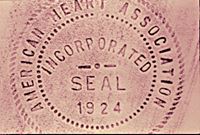
Six cardiologists form the American Heart Association as a professional society for doctors. One of the founders, Dr. Paul Dudley White, described the early years as a time of “almost unbelievable ignorance” about heart disease.
1925: Scientific Sessions begins
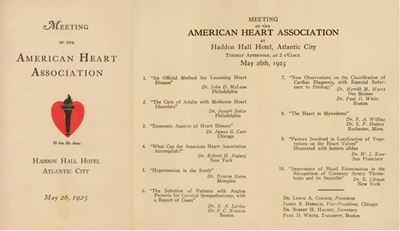
The Heart Association holds its first Scientific Sessions meeting where scientists and healthcare professionals learn the latest developments. Held every year since, except during World War II, the gathering grows to become the largest annual cardiovascular meeting in the U.S. and a leading international destination for the cardiovascular health community.
1944: Saving the lives of 'blue babies'
Collaborating with pediatric cardiologist and future Heart Association President Helen Taussig, cardiac surgeon Alfred Blalock connects oxygen-rich and oxygen-deprived blood vessels in a child with Tetralogy of Fallot. With this heart defect, some oxygen-poor blood is pumped to the body instead of to the lungs due to a hole within the heart, leaving children with blue-tinted skin due to a chronic lack of oxygen. The so-called Blalock-Taussig bypass is lifesaving. Dr. Taussig went on to received four Heart Association grants between 1956 and 1964 to support her work.
1948: First funding for researchers
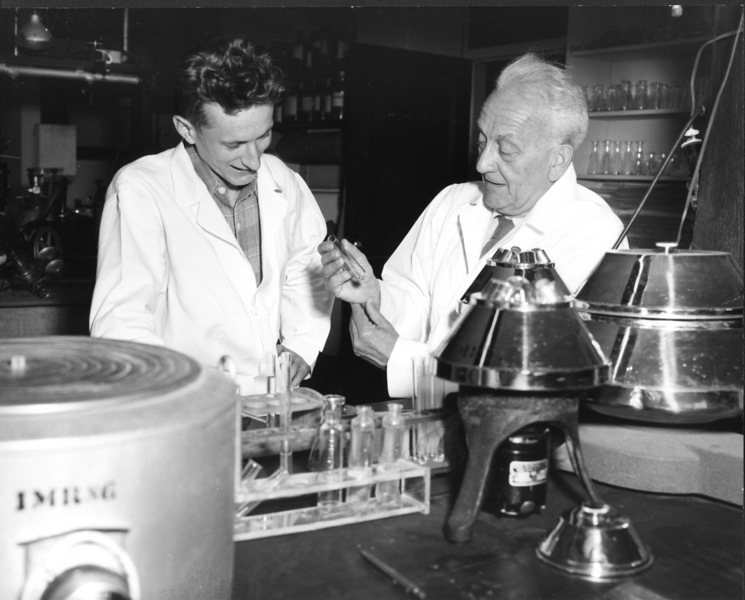 The Association awards its first research grant, to Dr. Albert Szent-Györgyi, a 1937 Nobel Prize winner. He emigrated from communist Hungary to the U.S. the year before, where he set up a laboratory and continued his work on muscle research in Woods Hole, Massachusetts. He also won an Association grant in 1950. The grants help fund studies about the energy that muscles, such as the heart, need to contract.
1949: Research explores diuretics to help control blood pressure
Funding enables Dr. Alfred Farah to examine whether a group of chemical compounds work as diuretics. Diuretics, also called “water pills,” help rid the body of excess sodium and water. They are used to treat heart failure and help control blood pressure.
1950: New use for an old drug
Dr. William Schwartz receives Heart Association funding and discovers that sulfanilamide, a drug used to treat bacterial infections, acts as a diuretic in people with congestive heart failure. Diuretic, which help move extra fluid and salt out of the body, remain one of the best medicines for high blood pressure and heart failure.
1956: The first statement on smoking and heart disease
The Association's first scientific statement on smoking and heart disease asserts, “Much greater knowledge is needed before conclusions can be drawn concerning possible relationships between tobacco smoking and increased death rates from coronary heart disease.” This is an early illustration that all research and Association statements are based on conclusive evidence.
1956: A dietary fat - cholesterol link
Dr. Ancel Keys, supported with Association funding, first links dietary fat with cholesterol. This discovery spurs the Association to assume a leading role in urging Americans to change their eating habits.
1956: The power of electricity
For the first time in human medicine, an external defibrillator successfully restores a steady rhythm to a quivering heart. Dr. Paul Zoll leads the study with Heart Association funding. The next year, electrical engineers Dr. William Kouwenhoven and doctoral student Guy Knickerbocker unveil the first portable external defibrillator.
1957: First pacemaker implanted
The first battery-operated, wearable pacemaker is implanted in a patient. The research leading to this discovery, pioneered by Dr. William Weirich and funded by the Association, led to the development of the fully implanted pacemakers used today.
1957: Blood pressure lowering drug discovered
Dr. Edward Freis, through Association funding, determines chlorothiazide is effective in reducing blood pressure.
1958: Helping blood flow
Radioactive potassium and rubidium are used to measure regional blood flow in research led by Leo A. Sapirstein, M.D., and supported by the Association. The findings help advance knowledge of blood flow throughout the entire circulatory system.
1958: Oxygen demand linked to chest pain from poor blood flow
Through his Association-funded research, Dr. Louis N. Katz determines that the heart's demand for oxygen is specifically tied to blood flow to the heart muscle. The finding helps explain chest pain caused by inadequate blood flow through the arteries.
1960: First successful pacemaker surgeries reported
 Dr. William Chardack reports the first successful surgeries for a completely implanted pacemaker. He is funded by the Erie County Division of the New York State Affiliate. Production of implantable pacemakers quickly gets underway.
1960: First artificial heart valve replacement
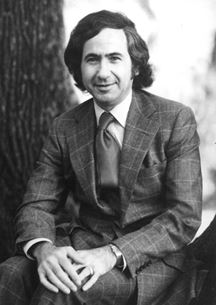
Dr. Albert Starr performs the first long-term successful mitral valve replacement with a caged ball valve, ushering in a new era of valve replacement. He is supported in developing the artificial heart valve by the Association and assisted by hydraulic engineer Lowell Edwards. The Starr-Edwards valve is still used today, along with other artificial heart valves.
1960: Specialized heart cells discovered
Dr. Brian Hoffman publishes a new account of specialized heart tissues that control cardiac excitability, work supported by Heart Association funding.
1961: Saving hearts with CPR
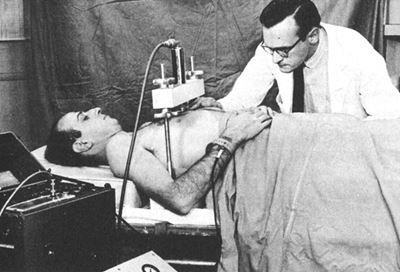
Aided by Association funding, Dr. William Kouwenhoven, Guy Knickerbocker and Dr. James Jude show how combining mouth-to-mouth breathing with chest compressions creates cardiopulmonary resuscitation, the lifesaving actions of CPR. We now know that immediate bystander CPR can double or triple the odds of surviving cardiac arrest.
1961: Pioneering microsurgery
Dr. Julius Jacobson performs surgery with the aid of a microscope. With Association funding, he becomes a pioneer in microsurgery, which leads to advances in coronary artery surgery, neurosurgery, plastic surgery, limb reimplantation, gynecology, orthopedic surgery and tumor surgery.
1964: The first female career investigator grantee
Biochemist Mildred Cohn is the Association's first female career investigator. Her work contributed to the development of the MRI, one of the most sophisticated imaging methods used today.
1964: Imaging technique for diagnosing Myocardial disease
Dr. Richard Ross, aided by the Maryland Affiliate, measures myocardial blood flow using radioactive xenon. This improves diagnosis of patients with myocardial disease.
1965: Pediatric pioneer takes the reins
Dr. Helen Taussig becomes the first woman president of the American Heart Association. Taussig is considered the founder of pediatric cardiology, and with surgeon Dr. Alfred Blalock and laboratory technician Vivien Thomas, pioneered the "blue baby" operation that helped establish the field of pediatric cardiac surgery. She received four Association grants between 1956 and 1964.
1966: Technique corrects heart defects in newborns
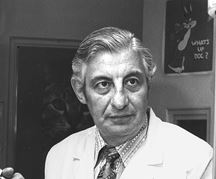 Association funding leads to a technique developed by Dr. Willian Rashkind, known as the founder of interventional cardiology. The procedure to correct septal defects in newborns, demonstrates that major heart procedures can be performed through a catheter.
1966: 20-year study shows risks of blood pressure
Dr. Maurice Sokolow, who received Association funding, announces the results of a 20-year study showing that hypertension can decrease life expectancy. The research also finds persistently elevated blood pressure increases the risk of complications, including heart enlargement and eye abnormalities. 1966: New option to treat heart disease
1966: New option to treat heart disease
William C. Elliott, MD, shows that isoproterenol improves the amount of blood pumped by the heart, providing a new treatment option for heart disease patients. He received Heart Association funding in 1962.
1968: Drug found to lower cholesterol
With Heart Association support, Dr. William Conner uses cholestyramine to lower blood cholesterol. Cholestyramine is among the various cholesterol-lowering drugs still used today.
1971: A Nobel for cyclic AMP
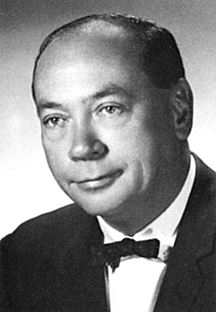
Dr. Earl Sutherland is awarded the Nobel Prize in Physiology or Medicine for earlier work identifying a molecule called cyclic AMP (or adenosine monophosphate). This small molecule is found inside cells and plays a central role in myriad cellular functions, contributing to disorders as diverse as heart failure and cancer. In 1967, he received a Heart Association Career Investigatorship.
1971: The connection between kidneys and blood pressure
Through Association funding, Dr. Arthur Guyton provides evidence of the overriding dominance of the kidneys in long‐term regulation of blood pressure and in hypertension.
1985: Drs. Brown and Goldstein awarded Nobel Prize fundamental cholesterol findings
Drs. Joseph L. Goldstein and Michael S. Brown, both of whom received Association support early in their careers, win the Nobel Prize in Physiology or Medicine for their research on the role of low-density lipoprotein receptors in controlling blood cholesterol levels. Their research provides new insights into the ways fatty cholesterol enters body cells and why cholesterol levels may become too high. (They won the 1984 Research Achievement Award for the same cholesterol-related discovery.)
1986: Funding for the future
A partnership between the Heart Association and Henrietta B. and Frederick H. Bugher Foundation, led to establishing the American Heart Association / Bugher Foundation Centers for Molecular Biology in the Cardiovascular System. Using a $9.4 million contribution from the Bugher Foundation, the Association administered six centers from 1986-96. About 120 clinically trained fellows learned molecular biology techniques through the efforts of the six centers. This success leads to later Bugher grant programs for the investigation, prevention and treatment of stroke. By 2023, gifts from the foundation to the Association had exceeded $50 million.
1987: Statins get their start
The cholesterol-lowering drug lovastatin is released into the market after the FDA approved its use in 1984. Scientists with research roots in the Heart Association made significant contributions to lovastatin testing.
1990: First drug approved for infants with heart, lung defects
Developed by Heart Association career investigator Dr. John Clements, Exosurf Neonatal, the first synthetic lung surfactant to treat respiratory distress syndrome (RDS) is approved by the FDA. The syndrome is a life-threatening condition for premature infants with heart and lung defects.
1992: Drs. Krebs and Fischer awarded Nobel Prize for protein research
Drs. Edwin G. Krebs, and Edmond H. Fischer are awarded the Nobel Prize in Physiology or Medicine for their discovery of how proteins are switched on to perform functions within cells Dr. Krebs, whose research had funding support from the Association, received the Research Achievement Award in 1987.
1998: Nitric oxide findings yield Nobel Prize
Drs. Robert F. Furchgott, Louis J. Ignarro and Ferid Murad are awarded the Nobel Prize in Physiology or Medicine for their insights on nitric oxide, a gas that dilates blood vessels by relaxing their smooth muscles. Furchgott received Association funding in 1952-54, and Ignarro was the 1998 recipient of the Basic Research Prize.
2001: Mechanical pump helps patients awaiting transplant
Heart Association-funded researcher Dr. Christine S. Moravec reports that mechanical pumps, called left ventricular assist devices, can reverse diminished heart muscle performance in people with heart failure who are awaiting transplantation. The study is among the first to look at recovery mechanisms that control the heart’s ability to contract during stress.
2003: Making stents more effective
The FDA approves the first drug-coated stent to keep blocked arteries open. Dr. Andrew R. Marks, a researcher funded by the Association in the 1990s, developed the coating to release medication that prevents new blockages by inhibiting the growth of vascular smooth muscle cells at the stent site.
2003: Nobel Prize recognizes a fluid discovery
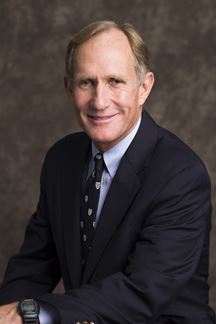
Heart Association-funded researcher Dr. Peter Agre is co-awarded the Nobel Prize in Chemistry for his discovery of aquaporins, proteins that govern the movement of water in and out of cells. His work leads to new research examining brain swelling after a stroke and water retention in heart failure. Dr. Agre received Association Established Investigator funding from 1987-92.
2007: Nobel Prize for discovery in gene targeting
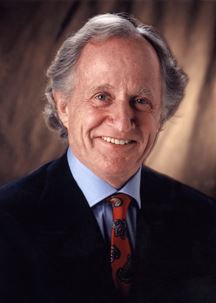
Dr. Mario Capecchi shares the Nobel Prize in Physiology or Medicine for his discoveries in gene targeting. Gene targeting is used in research for heart disease, high blood pressure, cancer and other conditions. Dr. Capecchi received Association Established Investigator Award funding from 1969-73.
2007: Funding and fats
Association funding enables Dr. Stephen Young to identify a new molecule that may help regulate the delivery of fats to cells for energy and storage. The finding could lead to a better understanding of how we use fats from the foods we eat.
2008: Simpler CPR for bystanders
The Heart Association releases new recommendations that bystanders who are untrained, unwilling or unable can use Hands‐Only CPR to help an adult or teen who collapses suddenly, delaying rescue breaths until help arrives. The change reflects findings from multiple studies from Dr. Gordon Ewy and colleagues showing that uninterrupted, high-quality chest compressions without rescue breaths can be lifesaving in the first minutes of a sudden cardiac arrest.
2008: A glowing genetic tag earns Nobel Prize
Dr. Martin Chalfie shares the Nobel Prize in Chemistry for developing green fluorescent protein as a genetic tag to see inside living cells, including heart cells, to better understand how the cells are made and how they work. The Heart Association funded Chalfie earlier in his career with a British‐American Research Fellowship in 1977.
2008: Spina Centers focus on results
The American Heart Association-Pharmaceutical Roundtable-David and Stevie Spina Outcomes Research Centers launches. The focus is on the results of healthcare interventions for people who have or are at risk for heart disease and stroke.
2009: Cardiac Myogenesis research centers launch
The American Heart Association-Jon Holden DeHaan Foundation Cardiac Myogenesis Research Centers of Excellence launches. The centers conduct studies to determine how regeneration of those cells can help improve outcomes for heart attack and heart failure patients.
2011: Nobel Prize awarded to Early Association-Funded researcher
Dr. Ralph Steinman shares the 2011 Nobel Prize in physiology or medicine for his discovery of how the immune system responds to infection. Steinman, whose work has provided critical insights in heart transplantation, received Heart Association funding as an established investigator in the 1980s.
2012: Association-funded researcher awarded Nobel Prize
Dr. Robert Lefkowitz is co-recipient of the Nobel Prize in Chemistry for studies of G-protein-coupled receptors. These allow cells to sense and respond to internal and external signals, such as flavors, odor, light and danger. Such studies have been instrumental in developing more effective drugs to treat cardiovascular disease and other illnesses. Dr. Lefkowitz received Heart Association research funding from 1973–1979, and won the 2009 Association's Research Achievement Award.
2013: Pressing for precision medicine
With $30 million in funding over five years, the Association establishes the Cardiovascular Genome‐Phenome Study to accelerate groundbreaking research into personalized medicine. The project is an innovative collaborative among the Heart Association, Boston University and University of Mississippi Medical Center. Boston University is the academic coordinating center home of the Framingham Heart Study, and the University of Mississippi Medical Center is the coordinating center home of the Jackson Heart Study. The Jackson Heart Study also involves Jackson State University and Tougaloo College to become the Association's Institute for Precision Cardiovascular Medicine.
2013: Government tobacco grants program launches
The Heart Association receives a five-year $19.6 million grant as one of 14 Tobacco Centers Of Regulatory Science (TCORS) funded by the U.S. Food and Drug Administration (FDA) and the National Institutes of Health (NIH) as a part of an on-going interagency partnership. This leads to the formation of the Tobacco Regulation and Addiction Center (A-TRAC), constituted by the Heart Association and eight leading academic institutions to aid the development and evaluation of tobacco product regulation by the FDA and thereby contribute to the protection of public health and reduction of tobacco-related disease, disability and death.
2014: More research into children's hearts
The Children's Heart Foundation (CHF) partners with the American Heart Association to establish the joint Congenital Heart Defect Research Awards. A total of $22.5 million would be awarded to support investigators who are actively conducting basic, clinical, population or translational research directly related to congenital heart defects.
2016: A bold new research initiative
The Heart Association launches One Brave Idea™, an unprecedented research initiative awarding a total of $75 million to one team focused on a game-changing approach to combat heart disease, funded by the Association, Verily and AstraZeneca, with additional support in 2018 from Quest Diagnostics. In 2016, Dr. Calum MacRae is selected — from a pool of 349 applicants in 22 countries — to lead One Brave Idea. He was chosen for his vision to identify coronary heart disease at the earliest stages.
2019: Association-funded researcher wins Nobel Prize
Gregg L. Semenza, MD, PhD, of Johns Hopkins University was co-awarded the 2019 Nobel Prize in Physiology or Medicine for discovery of how cells sense and acclimate to oxygen availability, the mechanism for one of life’s most essential adaptive processes. Dr. Semenza has received five Association research grants including his now Nobel Prize-winning work on HIF-1 which began in 1993.
2019: Countering the rise of e-cigarettes

2020: Pivoting for the pandemic
 The Heart Association quickly began work to ensure optimal care for coronavirus patients with cardiovascular disease, who have an increased risk for adverse outcomes with COVID-19. The result is COVID-19 Content: American Heart Association Compendium. The site houses research-based resources for health systems, clinics, care providers, patients and the public, including the COVID-19 CVD Registry. Powered by the Association’s Get With The Guidelines® hospital quality improvement program with data available on its secure Precision Medicine Platform, the registry rapidly improved knowledge transfer. In 2022, with more than 75,000 patients enrolled, 89 research proposals received and 21 papers already published, the registry achieved its objectives and remains open for data download.
2021: Presidential Advisory Calls for Action on Structural Racism and Health Disparities
As part of the priority set in the Presidential Advisory, the Association committed $100 million over five years for new research initiatives focused on equitable health and programs that support diversity in the biomedical workforce pipeline. The commitment was exceeded in 2022 with research networks on Prevention of Hypertension, Disparities in Cardio-Oncology, Science of Diverse Enrollment in Clinical Trials and Disparities in Maternal and Infant Health Outcomes.
2022: Systems change in rural health
The Association begins seeking proposals for $20 million in research projects for its Health Equity Research Network on Improving Access to Care and Other Health Inequities in Rural America.2022: $5 Billion in Research Funding
The Association reaches a milestone of more than $5 billion invested in over 47,000 scientific research projects since 1949, building upon our work as the largest nonprofit, nongovernmental funder of cardiovascular and cerebrovascular research in the U.S.
2023: Nobel Prize Awarded to Early Association-Funded Researcher
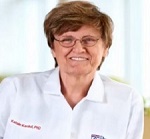 Katalin Karikó, PhD, adjunct professor of Neurosurgery at the University of Pennsylvania, receives the Nobel Prize in Physiology or Medicine alongside Drew Weissman, MD, PhD, for their seminal studies into messenger RNA (mRNA), a molecule vital to developing the COVID-19 vaccine. In the 1990s, Dr. Karikó received two Association grants that helped launch her career. Photo credit: Peggy Peterson Photography, courtesy Penn Medicine
 2024: Health and Hope