GPM Message from the Chair

I am deeply honored to serve as Chair of the American Heart Association Council on Genomic and Precision Medicine. It is a privilege to follow the outstanding leadership of Thomas Cappola, Carolyn Ho, Tommy Wang, Dan Roden, and many others who have helped shape this council into a vibrant home for discovery, education, collaboration, and implementation in cardiovascular genomics and precision medicine. I am grateful to our council leadership, committee members, volunteers, early-career members, trainees, and all members who continue to advance the mission of the American Heart Association.
We are entering an exciting and important era for precision cardiovascular medicine. Advances in human genetics, genomics, molecular discovery, imaging, digital health, implementation science, and data science are rapidly changing how we understand, prevent, diagnose, and treat cardiovascular disease. At the same time, targeted therapies include RNA-based therapies, gene-based therapies, and genotype-informed treatment strategies which are bringing precision medicine closer to routine clinical care. These advances create tremendous opportunity, but also an important responsibility: to ensure that genomic and precision medicine approaches are rigorous, equitable, clinically meaningful, and accessible to the patients and communities who need them most.
My own career has been shaped by the belief that precision medicine must connect discovery to clinical care. Through work in cardiovascular genomics, natriuretic peptide biology, genotype-guided physiology studies, pragmatic clinical trials, and clinical implementation, I have seen how deeply powerful this connection can be. I have also seen how much work remains to ensure that precision medicine benefits all communities, including those historically underrepresented in genomic research and underserved in cardiovascular care. As a council, we are uniquely positioned to lead this effort across the full spectrum of basic science, translational research, clinical investigation, population health, education, and implementation.
Our council has already built a remarkable portfolio of activities, including scientific statements, programming at Scientific Sessions, early-career engagement, the Cardiovascular Medical Genetics Certificate Program, genomics education, member networking, and efforts to bring genomic medicine into diverse communities and clinical settings. I look forward to building this foundation by strengthening opportunities for trainees and early-career investigators, expanding collaborations across American Heart Association councils, supporting innovative science, and promoting implementation of genomic and precision medicine in real-world cardiovascular practice.
I encourage all members, whether you are a basic scientist, geneticist, clinician, epidemiologist, data scientist, trialist, implementation scientist, trainee, or allied health professional, to get involved. Bring your ideas, your energy, and your colleagues. Volunteer for council activities, participate in scientific statements and programming, mentor the next generation, and help us define the future of precision cardiovascular medicine.
Together, we can advance the American Heart Association’s mission to be a relentless force for a world of longer, healthier lives by ensuring that genomic and precision medicine moves from discovery to action, from promise to practice, and from innovation to equitable impact.
Pankaj Arora, MD, FAHA
Chair, Council on Genomic and Precision Medicine
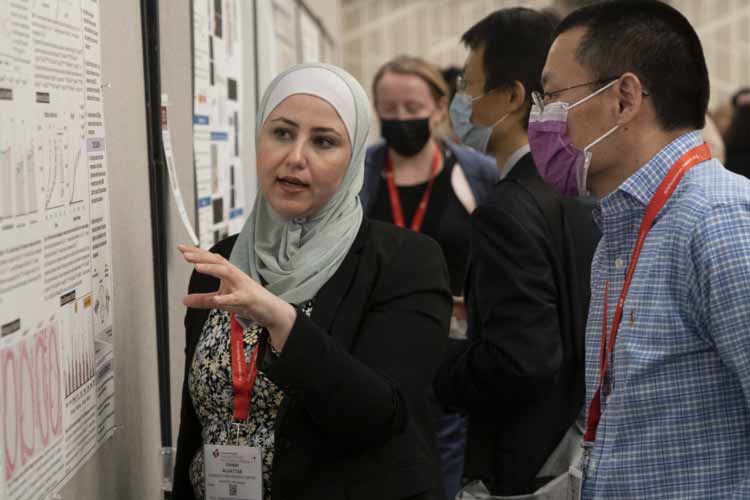
Vascular Discovery: From Genes to Medicine

McCormick Place Convention Center, Chicago, Illinois
