2026 Guideline for the Evaluation and Management of Acute Pulmonary Embolism in Adults
Updated: February 19, 2026

- A new clinical classification scheme is presented, entitled “Acute Pulmonary Embolism Clinical Categories,” with five categories (A–E) and subcategories, ranging from low to high risk for adverse outcomes, in order to enhance the precision of severity classification, prognosis assessment, and evidence-based therapeutic decision-making for patients presenting with acute PE.
- Symptomatic patients with acute PE and an elevated clinical severity score, including those with elevated biomarkers and/or right ventricular dysfunction (AHA/ACC PE Category C), incipient cardiopulmonary failure (AHA/ACC PE Category D), and those with cardiopulmonary failure characterized by persistent hypotension (AHA/ACC PE Category E) should be hospitalized to optimize treatment strategies.
- In patients with acute PE who are eligible for oral anticoagulation, direct oral anticoagulants (DOACs) are recommended over vitamin K antagonists (VKAs), unless contraindicated, to prevent recurrent venous thromboembolism (VTE) and reduce major bleeding.
New 2026 AHA/ACC Acute PE Guideline: What Clinicians Need to Know
Learn what’s new in the 2026 AHA/ACC/Multisociety Guideline for Acute Pulmonary Embolism. Writing Committee Chair Mark A. Creager, MD, FACC, FAHA, MSVM, Co Vice Chairs Geoffrey D. Barnes, MD, MSc, FACC, FAHA, FSVM and Jay Giri, MD, MPH, FACC, FAHA, FSCAI, and ACC/AHA Joint Committee on Clinical Practice Guidelines Liaison Debabrata Mukherjee, MD, MS, FACC, FAHA, FSVM, MSCAI, highlight the most important updates for clinical practice.
Supporting Materials
- Top Things to Know: 2026 Guideline for the Evaluation and Management of Acute Pulmonary Embolism in Adults
- News Release: First AHA/ACC Acute Pulmonary Embolism Guideline Prompt Diagnosis and Treatment are Key
- Acute Pulmonary Embolism Guideline Slide Set (PPTX)
- Acute Pulmonary Embolism Pocket Guide
- Top Take-Home Messages for the Emergency Physician (PDF)
- Key Patient Messages for Acute Pulmonary Embolism (PDF)
- Patient Resource: What is a Pulmonary Embolism Infographic (PDF)
- Patient Resource: Que es una Embolia Pulmonar Infographic Spanish (PDF)
Clinical Update Slides & Infographics
- 2026 Acute Pulmonary Embolism Guideline Essentials Clinical Slide Series
Download 2026 Acute Pulmonary Embolism Guideline Essentials Clinical Slide Series (PPTX) - Acute Pulmonary Embolism Collaborator Infographic (PDF)
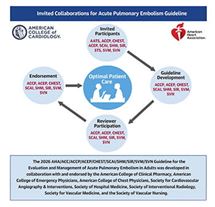
Download Acute Pulmonary Embolism Collaborator Infographic (PDF) - AHA/ACC Acute PE Clinical Categories Infographic (PDF)
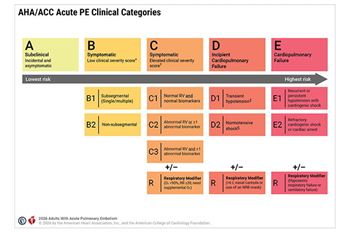
Download AHA/ACC Acute PE Clinical Categories Infographic (PDF)
Recommended Reading
- Disparities in Current Pulmonary Embolism Management and Outcomes
- Status and Future Directions for Balloon Pulmonary Angioplasty in Chronic Thromboembolic Pulmonary Disease With and Without Pulmonary Hypertension
- Surgical Management and Mechanical Circulatory Support in High-Risk Pulmonary Embolisms: Historical Context, Current Status, and Future Directions